
Smart Security: How Does an Electronic Key Cabinet Work?
In the modern operational ecosystem, physical keys remain a vital access tool for facilities, vehicle fleets, data centers, and restricted equipment. Yet, managing these physical assets via manual ledger books or unsecured pegboards is a major vulnerability. Lost keys lead to compromised security, expensive rekeying processes, and hours of wasted productivity. This operational friction is driving security heads and facility managers to ask a fundamental question: how does an electronic key cabinet work, and can it scale to meet commercial security demands?
At Keysystems we specialize in reselling and integrating top-tier physical security solutions. While our name is synonymous with perimeter and vehicle surveillance, we look at security holistically. Protecting the entry point of your facility is useless if the master keys inside your building are left unmonitored. In this comprehensive guide, we will break down the technical architecture behind these systems and explain exactly how does an electronic key cabinet work to protect your business assets.
The Fundamental Anatomy of an Automated Key System
To understand how does an electronic key cabinet work, you must look beyond the physical steel enclosure. A modern system is an intersection of intelligent hardware, secure physical locking mechanisms, and advanced database software.
Unlike a standard lockbox, an electronic cabinet treats every single key as an isolated, trackable digital asset. The process relies on heavy-duty, tamper-resistant steel lockers equipped with localized internal receptors. When a key is placed inside the system, it isn’t just stored; it is digitally locked into a specific slot and cataloged by an internal microprocessor.
Step-by-Step: How Does an Electronic Key Cabinet Work in Daily Operations?
To fully appreciate the efficiency of these systems, it helps to look at a typical user workflow. If you are evaluating these systems for a car dealership, a hospital, or a corporate campus, here is the step-by-step reality of how does an electronic key cabinet work:
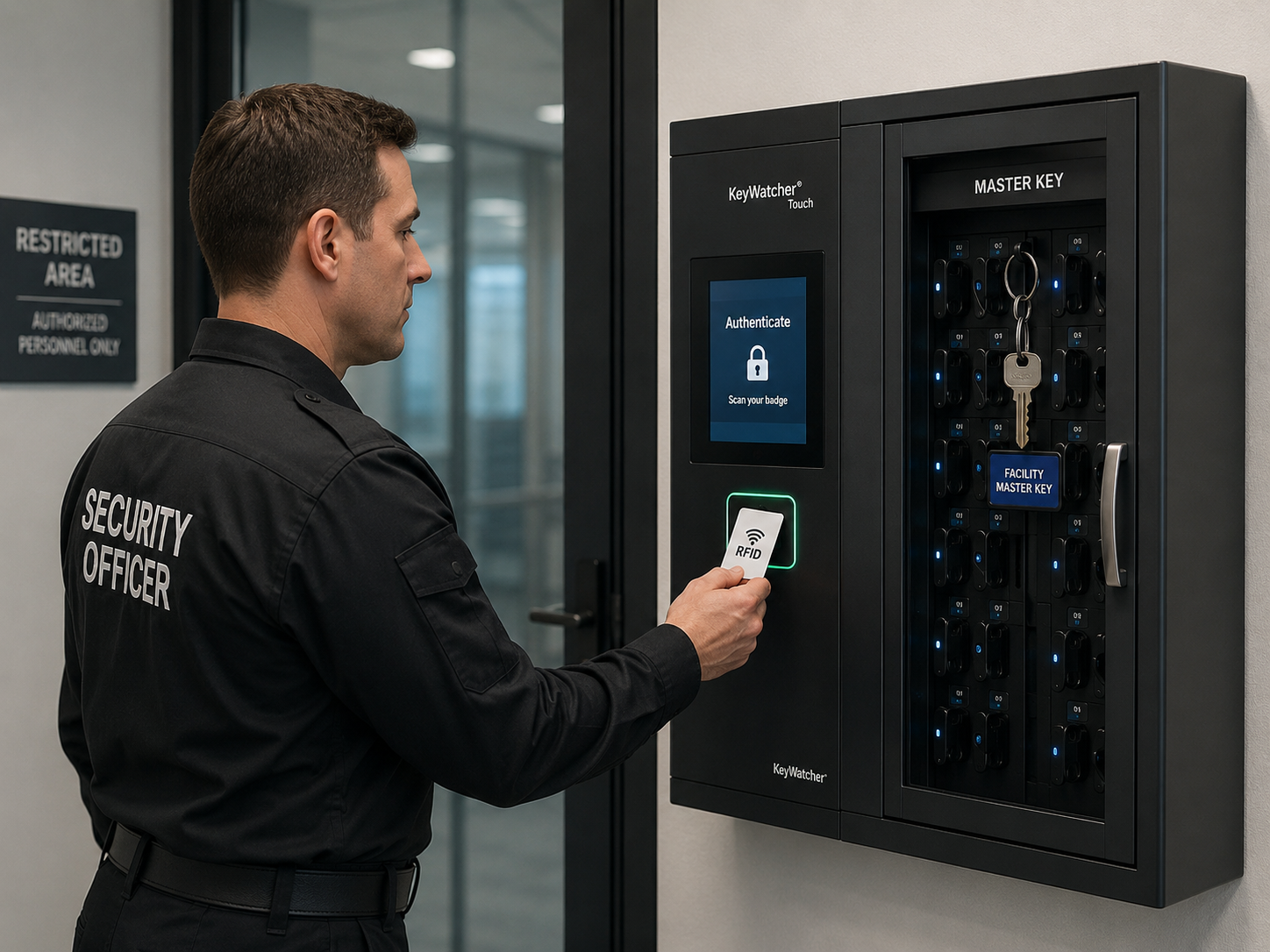
Step 1: User Authentication
The cabinet remains securely locked at all times. To initiate access, a staff member must verify their identity at the integrated terminal. Depending on your facility’s budget and security protocols, this can be done via:
- A unique PIN code entered on a touchscreen.
- An RFID proximity card or smart badge.
- Biometric identification (such as fingerprint or facial recognition).
Step 2: Grabbing the Requested Asset
Once the identity is validated, the user selects the required key or vehicle fob via the interface. The cabinet door unlocks, but the security does not stop there. The internal locking mechanism only releases the specific key slot requested. All other keys remain firmly locked in place. This localized locking is a crucial feature when studying how does an electronic key cabinet work in multi-user environments.
Step 3: Real-Time Audit Tracking
As the key is removed, the internal sensors register the transaction. The software immediately updates the master database with three data points: Who took the key, exactly when it was removed, and why.
Step 4: The Return Process
When the shift ends, the employee authenticates at the cabinet again. The system prompts them to return the asset. Advanced systems feature “random return,” meaning the user can insert the key into any open slot, and the internal receptor will automatically identify its new location.
The Role of Smart Fobs and Receptors
A massive component of how does an electronic key cabinet work comes down to the tracking token attached to the key ring. Traditional systems used basic mechanical pegs, but modern commercial systems utilize sophisticated electronic fobs or contact chips.
These smart fobs contain a unique identification code. When inserted into a cabinet receptor, a direct data connection is formed. This allows the system to verify that the correct item has been returned. If an employee attempts to cheat the system by returning a dummy key on an empty ring, the receptor detects the missing chip or mismatched ID and triggers an immediate alert to administration.
Centralized Management via Cloud Software
If you ask an IT manager or security director, “how does an electronic key cabinet work to simplify my job?”, the answer lies entirely within the management software. The cabinet itself is simply the physical endpoint; the software is the brain.
Modern cabinets connect directly to your corporate network via LAN or Wi-Fi. This connectivity allows for centralized control across multiple facilities. From a single dashboard, an administrator can:
- Restrict Access by Schedule: Prevent cleaning staff from pulling master keys outside of their working hours.
- Set Curfews: Receive automated email or SMS alerts if a high-value vehicle key is not returned by 6:00 PM.
- Analyze Usage Metrics: Run reports to see which assets are used most frequently, which helps optimize fleet or tool management.
Commercial Applications: Who Benefits Most?
As an established reseller, Keysystems helps clients across various industries match the right key containment hardware to their operational workflows. Understanding how does an electronic key cabinet work helps highlight its value across diverse sectors:
- Property & Facility Management: Managing master keys for commercial real estate portfolios, ensuring maintenance contractors only access authorized areas.
- Automotive Dealerships & Fleet Operators: Protecting expensive vehicle fobs from internal shrinkage and streamlining client test drives.
- Data Centers & High-Security Zones: Restricting access to server racks and mechanical rooms, maintaining strict compliance logs for data protection audits.
Why Partner with Keysystems for Your Facility Security?
Investing in automated key infrastructure is a significant step toward full operational security. At Keysystems, we bring our years of experience in high-end perimeter protection to the interior of your business. We don’t just sell hardware; we provide complete, integrated security ecosystems.
Our technical team helps you understand exactly how does an electronic key cabinet work within your existing IT setup. We assist with network integration, software configuration, and choosing the right authentication methods to ensure your new system delivers maximum ROI from day one.
Conclusion: Hardening Your Internal Assets
Perimeter security is only half the battle. True facility protection requires checking the vulnerabilities inside your walls. Knowing how does an electronic key cabinet work proves that manual tracking is an unnecessary risk in 2026. By automating accountability, you eliminate lost assets, protect high-value inventory, and optimize daily operations.
Ready to eliminate key chaos in your organization? Contact Keysystems today for a personalized technical consultation and find the perfect intelligent key tracking solution for your business.